
Search engines are no longer just search engines. In 2026, platforms like Google AI Overviews, ChatGPT, Gemini, and Perplexity act as answer engines, delivering instant, AI-generated responses instead of traditional blue links. This shift has made AI-Driven Search Optimization 2026 a critical strategy for brands that want visibility in an AI-first search ecosystem.
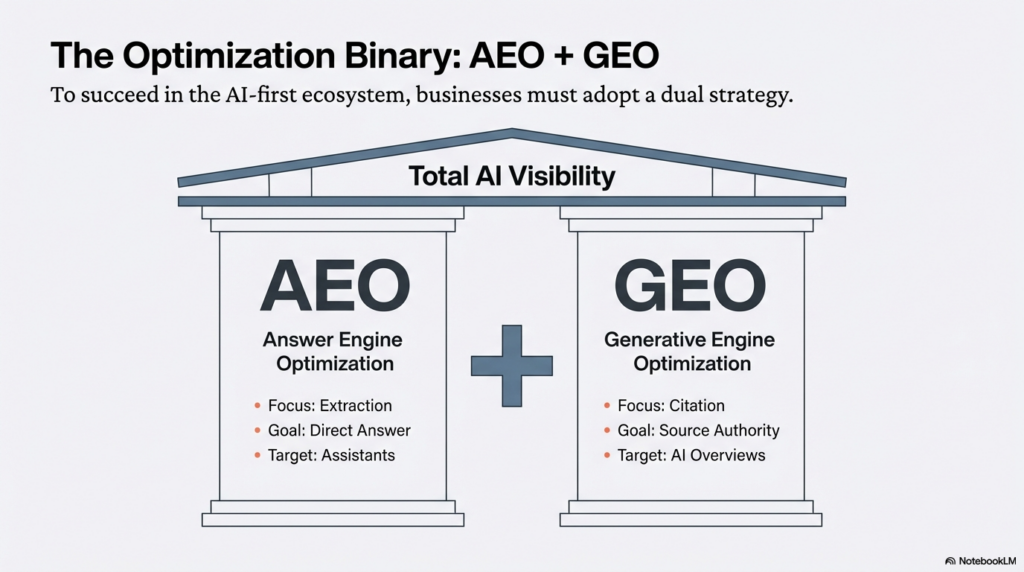
To succeed today, businesses must move beyond traditional SEO and adopt Answer Engine Optimization (AEO) and Generative Engine Optimization (GEO) strategies that align with how AI systems retrieve, summarize, and present content.
What Is AI-Driven Search Optimization in 2026?
AI-Driven Search Optimization focuses on making content easily understandable, retrievable, and citable by AI systems rather than just ranking on SERPs. Instead of keyword stuffing, AI models evaluate:
- Content clarity
- Entity relationships
- Semantic depth
- Structured formatting
This evolution explains why semantic search and entity optimization have become more important than exact-match keywords.
Understanding Answer Engine Optimization (AEO)
Answer Engine Optimization (AEO) is the process of optimizing content so that AI assistants can directly extract and display answers.
Why AEO Matters:
- AI assistants prefer clear, concise answers
- Zero-click searches are increasing
- Featured responses improve brand authority
AEO Best Practices:
- Use question-based headings
- Provide direct answers within the first 40–60 words
- Structure content using bullet points and definitions
Optimizing for conversational long-tail search queries is especially important, as most AI searches resemble natural language questions.
What Is Generative Engine Optimization (GEO)?
Generative Engine Optimization (GEO) ensures your content is cited, referenced, or summarized by AI-generated responses across platforms.
Unlike SEO, GEO prioritizes:
- Contextual relevance
- Topical authority
- Content trust signals
AI systems reward content that demonstrates expertise, depth, and structured knowledge making structured content for AI overviews essential.
Semantic Search and Entity Optimization
Modern AI models understand entities, not just keywords. An entity can be a person, concept, technology, or organization.
How to Optimize for Entities:
- Clearly define key terms
- Use related concepts naturally
- Maintain topical consistency throughout the article
This approach improves AI search visibility strategies and increases the chances of being used as a reliable AI source.
Optimizing for Voice and AI Assistant Search SEO
With the rise of smart devices, voice and AI assistant search SEO has become a major ranking factor.
Optimization Tips:
- Use conversational tone
- Answer “who, what, why, how” queries
- Write short, clear sentences
Voice search heavily influences zero-click AI summary visibility, where users get answers without visiting websites.
Winning Zero-Click AI Summary Visibility
Zero-click searches dominate AI-powered platforms. While this reduces website visits, it increases brand exposure and authority.
To win zero-click visibility:
- Add concise summaries at the top of pages
- Use schema and structured headings
- Include expert-style explanations
Being referenced by AI engines builds trust and long-term discoverability.
Future-Ready AI Search Visibility Strategies
To stay competitive in AI-Driven Search Optimization 2026, businesses must:
- Shift from keyword density to topical depth
- Optimize content for AI interpretation
- Align with AEO and GEO frameworks
AI search isn’t replacing SEO – it’s evolving it.
The future of digital visibility lies in AI-Driven Search Optimization 2026. By implementing Answer Engine Optimization (AEO), Generative Engine Optimization (GEO), and semantic search strategies, businesses can secure a strong presence in AI-generated search results.
As AI continues to redefine how information is discovered, those who adapt early will dominate visibility, authority, and trust in the new search era.
Using AI Tools for Search Optimization
In 2026, AI-driven search optimization relies heavily on intelligent tools that analyze data at a scale humans can’t. AI-powered SEO platforms now go beyond basic keyword tracking—they interpret user intent, predict ranking shifts, and recommend optimizations in real time.
Modern AI tools help with:
- Search intent clustering to understand what users actually want, not just what they type
- Content gap analysis driven by machine learning models
- Automated technical SEO audits, including crawlability, schema, and page experience
- Predictive keyword trends, allowing brands to act before demand peaks
To stay competitive, SEO teams should combine AI automation with human oversight. The goal isn’t to replace strategy but to accelerate decision-making and execution within AI-driven search environments.
AI-Driven Search Optimization 2026: Best Practices
First, AI-driven search optimization in 2026 requires a shift from keyword-focused SEO to intent-driven strategies. Moreover, search engines now prioritize context, relevance, and user satisfaction. As a result, high-quality content and clear structure have become essential for visibility.
Additionally, brands should leverage AI tools to gain predictive insights and automate SEO workflows. For example, machine learning models help identify emerging trends and optimize content at scale. Furthermore, content should be structured for semantic understanding rather than keyword repetition.
Finally, performance measurement must evolve alongside AI-driven search. Therefore, tracking engagement, visibility, and intent satisfaction is more valuable than relying solely on rankings. Overall, adaptability and continuous optimization remain critical for long-term success.
Using AI Tools for AI-Driven Search Optimization
AI search engines in 2026 evaluate content based on context, depth, and usefulness, not just keywords. Optimizing for AI-driven search means writing content that demonstrates topical authority and directly answers user intent.
Best practices include:
- Structuring content with clear H2 and H3 hierarchies to improve AI comprehension
- Using natural language and semantic keywords instead of exact-match repetition
- Providing direct answers, examples, and summaries to support AI-generated results
- Enhancing content with entities, internal links, and schema markup
AI-driven search optimization favors content that feels human, solves real problems, and stays updated. Pages that are overly optimized for bots but lack substance are increasingly filtered out of AI-based rankings.
Optimizing Content for AI-Driven Search Optimization in 2026
AI search engines in 2026 evaluate content based on context, depth, and usefulness, not just keywords. Optimizing for AI-driven search means writing content that demonstrates topical authority and directly answers user intent.
Best practices include:
- Structuring content with clear H2 and H3 hierarchies to improve AI comprehension
- Using natural language and semantic keywords instead of exact-match repetition
- Providing direct answers, examples, and summaries to support AI-generated results
- Enhancing content with entities, internal links, and schema markup
AI-driven search optimization favors content that feels human, solves real problems, and stays updated. Pages that are overly optimized for bots but lack substance are increasingly filtered out of AI-based rankings.
Measuring Success in AI-Driven Search Optimization
Traditional SEO metrics alone are no longer enough in AI-driven search optimization. In 2026, success is measured by a combination of visibility, engagement, and intent satisfaction.
Key metrics to track include:
- Search visibility across AI-generated results and answer engines
- User engagement signals such as dwell time, scroll depth, and return visits
- Topic-level authority growth, not just individual keyword rankings
- Conversion quality, driven by relevance rather than volume
AI-powered analytics tools now connect SEO performance to business outcomes, making it easier to evaluate ROI. Brands that continuously test, learn, and adapt their strategies will see the strongest results in AI-driven search landscapes.